Solar, explained plainly

Guides to subsidy, net metering, equipment and care in Punjab, Haryana, Himachal and Chandigarh, with the official source named for every rule.

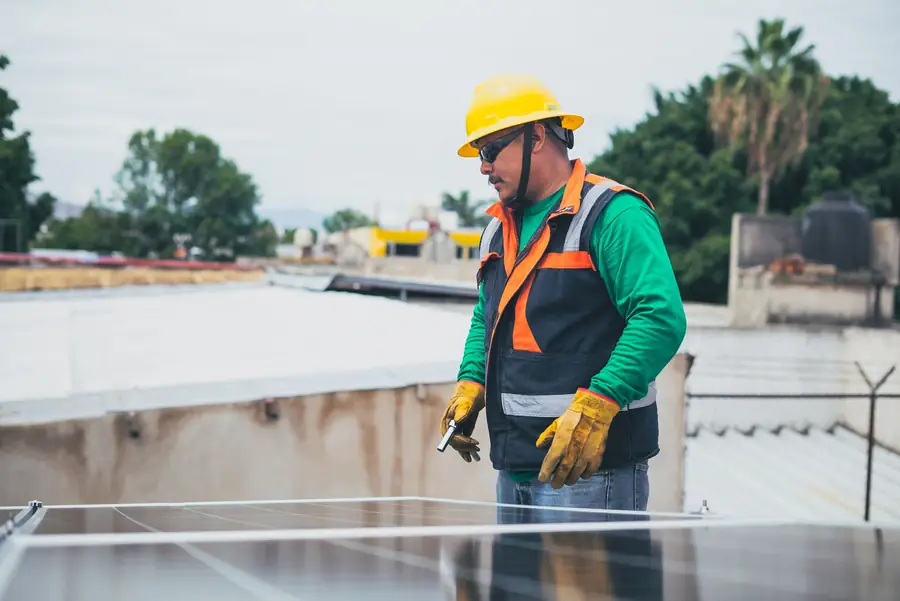
Solar technician in a hard hat, gloves and safety vest standing at a rooftop panel array

All 10 guides, by topic

Subsidy and schemes

How the PM Surya Ghar subsidy works Central assistance for home rooftop solar: ₹30,000 per kW for the first 2 kW, ₹18,000 for the third, capped at ₹78,000.

What the scheme pays

PM Surya Ghar: Muft Bijli Yojana pays central financial assistance for rooftop solar on homes. The amount is ₹30,000 per kW for the first 2 kW and ₹18,000 for the third kW, capped at ₹78,000. A system of 3 kW or larger therefore reaches the cap.

The central government sets these amounts and can change them. The national portal is the only source to trust on the current figure.

What you have to do

  • Apply on the national portal, not through an agent who asks for money to register you.
  • Use modules that meet the domestic content requirement (DCR). See the article on DCR and ALMM.
  • Choose an installer who is registered for the scheme on the portal, and ask to see the registration.
  • Expect the installer to maintain the plant for five years under the scheme.

What the subsidy does not do

It lowers the price you pay for the plant. It does not set your electricity savings, which depend on your tariff, your usage and the sun on your roof.

In Punjab, domestic connections also get free units under a state scheme, and Himachal Pradesh has been reported to keep one (unconfirmed). That affects how much solar saves on the energy part of your bill, so read your bills before you size a plant.

Housing societies

A group housing society or resident welfare association can claim ₹18,000 per kW for common facilities such as lifts, pumps and EV charging, up to 500 kW at 3 kW per house. Plants on individual homes inside the society count toward that limit.

How long it runs

The scheme runs until March 2027 (FY 2026-27). Check the portal for any extension before you plan a project that finishes after that.

Region by region

The central amounts above are the same in Punjab, Haryana and Chandigarh. Himachal Pradesh is a special-category state and gets more: ₹33,000 per kW for the first 2 kW and ₹19,800 for the third kW, capped at ₹85,800.

What also changes is who connects your plant: PSPCL in Punjab, UHBVN or DHBVN in Haryana, HPSEBL in Himachal Pradesh and CPDL in Chandigarh.

In Punjab we found no state top-up on the solar subsidy, and none in Himachal Pradesh. In Chandigarh no extra Union Territory subsidy is confirmed. In Haryana: Haryana has announced extra state help for low-income families: ₹50,000 for Antyodaya families earning up to ₹1.8 lakh a year (up to 2 kW), and ₹10,000 per kW up to ₹20,000 for incomes of ₹1.8 to 3 lakh. It is first come, first served, so we confirm availability with HAREDA and your DISCOM before counting on it.
Net metering

Net metering, step by step From the first application to the day the bi-directional meter starts counting, and who does what.

Net metering is how a grid-connected rooftop plant is allowed to export power. Your DISCOM (PSPCL in Punjab, UHBVN or DHBVN in Haryana, HPSEBL in Himachal Pradesh, CPDL in Chandigarh) approves it and the regulator sets the rules. The order below is the same in all four regions; forms, fees and timelines are not.

The sequence

  • Check your sanctioned load and your roof. The plant is sized against both.
  • Apply to your DISCOM. For PM Surya Ghar, the application starts on the national portal.
  • The DISCOM checks that your connection can take the plant.
  • The plant is installed to the approved design.
  • The DISCOM inspects it and fits or approves a bi-directional meter.
  • The plant is commissioned. With PM Surya Ghar, commissioning is also what unlocks the subsidy claim.

How long it takes

The DISCOM and the regulator set the timelines, and they vary with plant size and area. We do not quote a fixed number here. Ask us for the current expectation for your area, or read the regulator rules on its site.

What differs by region

  • Punjab: net metering runs under the PSERC Grid Interactive Rooftop Solar PV Systems Regulations, 2021. A PSERC order of August 2026 is reported to waive the application and meter-testing fees for domestic systems up to 10 kW linked to PM Surya Ghar.
  • Haryana: rooftop solar runs under the HERC net-metering and gross-metering regulations, 2021. Net metering is reported to be capped at 500 kW per consumer, with gross metering directed above that.
  • Haryana DISCOMs split by district: UHBVN serves 10 districts and DHBVN serves 12. The Haryana hub lists them.
  • Himachal Pradesh: the HPERC rooftop rules allow up to 10 kW on a single-phase connection, 20 kW on three-phase and 1 MW at 11 kV or higher (June 2024 amendment), with no technical feasibility study up to 10 kW. An amendment of 19 August 2026 lets the DISCOM accept a digital agreement inside the online application.
  • Chandigarh: net metering runs under the JERC rooftop solar regulations. Banked units left at the end of the financial year are credited at the average power purchase cost that JERC approves. We have not stated plant-size limits because we could not confirm them.

What we do

We file the net-metering application and coordinate the DISCOM inspection. You stay informed at each step.

Net metering or gross metering? Two ways to bill a rooftop plant. Most homes use net metering; some larger sites are offered gross metering.

Net metering

Your plant first feeds your own load. Only what you do not use goes to the grid. One bi-directional meter counts units drawn and units exported, and your bill is based on the net.

It suits homes and most businesses because the solar units replace the units you would have bought at your own tariff.

Gross metering

All the plant output is exported through its own meter and paid at a rate fixed by the regulator or the DISCOM. Your consumption is billed separately at your normal tariff.

It is a different financial model: the earnings depend on the export rate, not on your tariff.

Which one is available to you

Availability depends on the region, your consumer category and plant size. Your DISCOM and the regulator decide, so confirm with them before you commit. We will tell you what applies to your connection after the site survey.

Sizing and quotes

Seven things to check in a solar quote A quote you can compare line by line is worth more than a low total you cannot read.

Ask every installer for an itemised quote. Then check that each of these is a line of its own, not hidden in a lump sum.

  • Modules: make, model, wattage, count and DCR status.
  • Inverter: make, rating and warranty terms.
  • Mounting structure: material, coating and how it is fixed to your roof.
  • Cables and protection: DC and AC cable sizes, the DC and AC distribution boxes, earthing and lightning arrester.
  • Installation and commissioning.
  • Net-metering and subsidy filing: who does it, and whether it is included.
  • Maintenance terms: what the installer covers and for how long. PM Surya Ghar expects five years.

What to watch for

Items that appear in one quote and not in another are the usual reason for a price gap. Ask what is excluded: civil work, roof waterproofing and meter charges are common exclusions.

How big a plant do your roof and your bill need? Roof area and monthly units set the size. These are the working assumptions we use, labelled as assumptions.

Roof

We assume about 100 sq ft of shade-free roof per kW of modules. A 3 kW plant needs about 300 sq ft that is not shaded by tanks, parapets or trees.

Units

As an estimate for Punjab, a rooftop plant makes about 120 units per kW per month, so 3 kW makes about 360 units a month. It is an average, and we use the same figure for Punjab, Haryana, Himachal and Chandigarh until a survey says otherwise; hill sites and shaded roofs can differ. Real output depends on season, tilt, shade and how clean the panels are. The survey confirms the figure for your site.

What the subsidy guide suggests

The PM Surya Ghar guide suggests 1 to 2 kW for a home that uses up to 150 units a month, 2 to 3 kW for 150 to 300 units, and 3 kW or more above 300 units. It is a starting point, not a design.

Sanctioned load and bills

Your DISCOM checks the plant size against your sanctioned load. Look at twelve months of bills, not one, so winter and summer both show.

This is not a quote

The calculator on this site gives an estimate from these assumptions and the tariff you enter. A site survey gives you an itemised quote.

Equipment and safety

DCR and ALMM: what to ask your installer Two terms that decide whether your modules qualify for the subsidy and for government-backed projects.

DCR: domestic content requirement

PM Surya Ghar pays its subsidy only for plants that use DCR modules, meaning modules built with Indian-made solar cells. A module that is not DCR can still generate power, but the plant will not get the subsidy.

ALMM: approved list of models and manufacturers

The Ministry of New and Renewable Energy keeps a list of module makers and models that qualify for government-supported projects. The list is updated and its scope has changed over time, so read the current version on the ministry site rather than relying on an old copy.

What to ask

  • Is every module on the quote DCR? Ask for the model name and the manufacturer certificate.
  • Is the model on the current ALMM list?
  • Does the quote say the make and rating of the inverter, not just "branded"?
Earthing, lightning arresters and distribution boxes The unglamorous parts that keep a plant safe. What they do and what to ask to see.

DCDB and ACDB

The DC distribution box (DCDB) sits between the modules and the inverter. It holds DC protection and a way to isolate the strings. The AC distribution box (ACDB) sits after the inverter and holds the AC breaker and protection before the supply reaches your main panel.

Earthing

Metal frames, the structure and the inverter body are bonded to earth pits so that a fault or a surge has a safe path to the ground instead of through a person.

Lightning arrester

A lightning arrester catches a strike and sends it to a dedicated earth. It is a separate protection from the earthing of the equipment.

What to ask

  • Where the earth pits are, and a test reading for each.
  • Whether the quote lists the DCDB, ACDB, earthing and lightning arrester separately.

Farms and pumps

PM‑KUSUM: solar pumps and farm plants A central scheme for farmers with three components. Check that the window is open before you plan around it.

The three components

  • Component A: grid-connected solar plants on farmland.
  • Component B: stand-alone solar pumps.
  • Component C: solarising the grid-connected pumps farmers already use.

Where it stands now

PEDA states that the ministry closed PM‑KUSUM 1.0 on 31 December 2025 and that new allocations follow the launch of PM‑KUSUM 2.0. A later central notice is reported to have extended completion dates for projects that already had agreements, which is not a reopening of applications.

In Punjab the last pump window ran from 9 September 2024 to 31 August 2025. In Haryana, applications go through the SARAL Haryana portal when HAREDA opens a window, and we found no 2026-27 window. In Himachal Pradesh we found no open window either.

Who pays what for a pump (Component B)

Punjab, general category: about 30 percent central and about 30 percent state, so the farmer pays about 40 percent. Scheduled Caste farmers get about 50 percent from the state, per PEDA.

Haryana: 30 percent central and 45 percent state, so the farmer pays 25 percent, per HAREDA. Its page is dated 2023, so confirm today's terms.

Himachal Pradesh: the central grant is 50 percent of the benchmark or tender cost, whichever is lower, against 30 percent in most states. We have not confirmed the state and farmer shares.

Check before you plan

Applications are routed through the state agency: PEDA in Punjab, HAREDA in Haryana and HIMURJA in Himachal Pradesh. Confirm there that a window is open and what the current terms are.

Cleaning and care

Cleaning solar panels without harming them Dust, droppings and the wrong tools all cost you power or damage. How cleaning should be done.

How often

In dusty seasons, every 2 to 4 weeks. After rain, check whether the panels have been rinsed or just streaked.

How

  • Clean early morning or evening, when the glass is cool.
  • Use a soft brush and low-TDS water so mineral spots do not form on the glass.
  • Never use a pressure jet at the frame edges and never use abrasive pads.
  • Do not walk on the modules. Never climb a roof without fall protection.

Who

Reachable ground arrays can be cleaned by the owner. For roofs, use a trained crew. We clean plants installed by any company.

Is your plant producing what it should? Simple checks that catch a failing string, a shaded corner or a dirty array before a month of bills do.

Compare like with like

Look at the inverter units for a few clear days in the same season. A single cloudy day is not a fault. A drop on clear days is.

Common causes

  • Dust or droppings on the glass.
  • A new shadow from a tank, antenna or tree.
  • An inverter error code that nobody noticed.
  • A loose connector or a tripped breaker in the DC or AC box.

Watch it daily

Monitoring that alerts you to a fault is cheaper than finding it from the bill. Ask us about monitoring for plants installed by anyone.

Scheme amounts, rules and dates change. Each article says where to confirm the current position. This is general information, not legal, tax or electrical advice.

Check the source

Schemes, tariffs and timelines change. Each guide names where to confirm it. The official sites for your DISCOM, regulator and state agency are listed on the four region hubs.

Still have a question?

Call or message us, or book a survey and we answer it against your own roof and your own bills.

Jalandhar Bypass, Ludhiana 141088 info@wesicsenergies.com